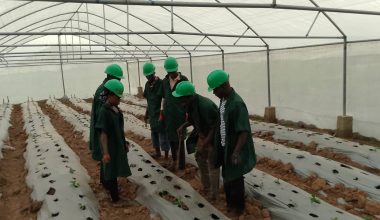
 Greenhouses
Crops to Plant in February in Nigeria | Dry Season Farming

Crops to Plant in February in Nigeria | Dry Season Farming
February is one of the most profitable months for farming in Nigeria if you know what you’re doing. While rainfall is still very low across most parts of the country, experienced farmers use this period to grow high-value crops that sell fast and command premium prices.
In this guide, you’ll learn the best crops to plant in February in Nigeria, carefully broken down by geopolitical zones, with practical dry-season farming tips that work for small, medium, and commercial farmers.
If you missed January farming or want to expand, February is still a strong opportunity.
Why February Is a Strategic Month for Farming in Nigeria
February sits right in the heart of the dry season. This comes with both challenges and advantages.
Advantages
- Scarcity of fresh vegetables in the market
- High prices for tomatoes, pepper, cucumber, leafy greens
- Lower weed pressure
- Reduced fungal diseases
- Strong demand from urban markets
Challenges
- Little or no rainfall
- High dependence on irrigation
- Faster soil moisture loss
Farmers who solve the water problem in February usually make excellent profits.
Key Requirements for February Dry Season Farming
Before choosing what to plant, ensure these basics are in place:
- Reliable Water Source
This could be:
- Borehole
- Well
- River or stream
- Storage tank with pump
- Drip or sprinkler irrigation system
- Suitable Soil
Loamy or sandy-loam soil works best in February because it drains well and warms up quickly.
- Market Access
February crops mature when prices are high, so proximity to markets matters.
Crops to Plant in February in Nigeria by Geopolitical Zones
North West (Kaduna, Kano, Katsina, Kebbi, Jigawa, Sokoto)
This zone remains Nigeria’s dry-season farming powerhouse.
Best Crops to Plant
- Tomato
- Pepper (tatase, rodo)
- Onion
- Carrot
- Cabbage
- Lettuce
- Spinach
- Wheat
Why These Crops Work
- Cool Harmattan nights favour vegetable growth
- Onion and tomato thrive under controlled irrigation
- Strong demand from southern Nigeria
Practical Tip
Use drip irrigation and mulch to conserve water and reduce heat stress.
North East (Borno, Yobe, Adamawa, Bauchi, Gombe, Taraba)
February farming here works best near rivers and irrigation schemes.
Best Crops
- Onion
- Tomato
- Pepper
- Okra
- Watermelon
- Lettuce
Why
- Long sunshine hours speed up maturity
- Low humidity reduces disease pressure
Early morning irrigation reduces water loss to evaporation.
North Central (Niger, Kwara, Benue, Kogi, Plateau, Nasarawa, FCT)
This zone supports both grain and vegetable production in February.
Best Crops
- Tomato
- Pepper
- Okra
- Watermelon
- Cucumber
- Sweet corn
- Carrot
- Cabbage
Why
- Moderate temperatures
- Access to dams and rivers
- Strong Abuja and urban markets
Raised beds improve root development and water efficiency.
South West (Oyo, Ogun, Osun, Ondo, Ekiti, Lagos)
February is one of the most profitable farming months in this zone.
Best Crops
- Tomato
- Pepper
- Cucumber
- Watermelon
- Ugu (fluted pumpkin)
- Spinach
- Lettuce
- Okra
Why
- Very high market demand
- Limited supply from rain-fed farms
- Fast crop turnover
Drip irrigation is the most cost-effective option for small farms in this zone.
South East (Anambra, Imo, Abia, Enugu, Ebonyi)
Fast-growing vegetables dominate February farming here.
Best Crops
- Ugu
- Okra
- Garden egg
- Pepper
- Tomato
- Spinach
- Amaranthus
Why
- Strong household consumption
- Vegetables mature quickly
- Easy local marketing
Shade seedlings during early growth to reduce heat stress.
South South (Rivers, Delta, Bayelsa, Akwa Ibom, Cross River, Edo)
Humidity is higher, but February still supports dry-season production.
Best Crops
- Okra
- Pepper
- Garden egg
- Ugu
- Waterleaf
- Maize (early maturing varieties)
Why
- Warm soil temperatures
- Good organic matter content
- Consistent local demand
Ensure good spacing to reduce pest and disease pressure.
WE HANDPICKED THIS FOR YOU:
- How To Start A Farm In Nigeria
- The Future of Farming in Nigeria
- Farm Inputs Every Nigerian Farmer Needs
Best Crops to Plant in February Across Nigeria
If you want crops that perform well in almost all zones, focus on:
- Tomato
- Pepper
- Okra
- Cucumber
- Watermelon
- Lettuce
- Spinach
- Ugu
These crops sell fast and attract premium prices during the dry season.
Irrigation Options for February Dry Season Farming
Irrigation is not optional in February.
Best Systems
- Drip irrigation – most efficient and water-saving
- Sprinkler irrigation – good for leafy vegetables
- Solar irrigation kits – ideal for off-grid farms
- Pump and hose – suitable for very small farms
Drip irrigation can save up to 50% water and significantly improve yield.
Estimated Cost of February Dry Season Farming (Small Farm)
For a 0.25–1 acre vegetable farm:
- Seeds: ₦10,000 – ₦35,000
- Irrigation kit: ₦55,000 – ₦250,000
- Fertilizers & agrochemicals: ₦25,000 – ₦60,000
- Labour: ₦15,000 – ₦40,000
Total depends on crop choice and scale.
Common Mistakes Farmers Make in February
- Planting without a water plan
- Using low-quality seeds
- Over-irrigating crops
- Ignoring mulching
- Poor pest monitoring
Avoiding these mistakes can significantly increase profit.
Best Farm Inputs for February Planting
For best results, use:
- Hybrid vegetable seeds
- Water-soluble fertilizers
- Mulch films or dry grass
- Drip irrigation kits
- Crop-specific pesticides
Good inputs shorten maturity time and improve yield.
Frequently Asked Questions
Is February good for farming in Nigeria?
Yes. February is one of the most profitable dry-season farming months if irrigation is available.
What crop sells fastest in February?
Tomatoes, pepper, cucumber, leafy vegetables, and watermelon sell very fast due to scarcity.
Can I farm in February without irrigation?
It is risky. Irrigation is strongly recommended for consistent results.
Finally
February is not a slow farming month. It is a high-opportunity season for farmers who understand dry-season production. By choosing the right crops for your zone and investing in simple irrigation, you can harvest when prices are high and competition is low.
For quality seeds, irrigation kits, fertilizers, and farm inputs, Farmsquare provides reliable options with nationwide delivery. Visit Farmsquare.ng to get started.